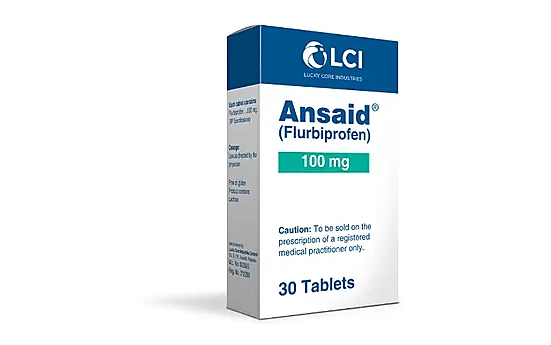
Ansaid Tablets contain Flurbiprofen, a non-steroidal anti-inflammatory drug (NSAID) used to reduce pain, swelling, and inflammation. It is commonly prescribed for certain joint conditions, muscle pain, and other inflammatory problems. The commonly listed strength in Pakistan is 100mg, although other strengths may exist. Always check the product packaging to confirm the exact formulation.
What Are Ansaid Tablets Used For?
Ansaid Tablets are used to help manage pain and inflammation associated with conditions such as rheumatoid arthritis, osteoarthritis, ankylosing spondylitis and certain musculoskeletal disorders. Doctors may also prescribe flurbiprofen for problems such as back pain, sprains, strains, tendon inflammation and bursitis. Its pain-relieving action may also help with dental pain, post-operative pain and menstrual cramps when considered appropriate by a healthcare professional.
Prescription Required
Yes. Ansaid Tablets should be used under medical supervision. A doctor can assess the cause of the pain, consider other health conditions and determine whether this medicine is suitable.
How Do Ansaid Tablets Work?
Flurbiprofen works by reducing the production of prostaglandins, chemical substances involved in pain, swelling and inflammation. It blocks the activity of enzymes called cyclooxygenases (COX), which help produce these substances. As inflammation decreases, pain and stiffness may become easier to manage.
Ansaid Tablets Uses in Urdu
جوڑوں کے درد، گٹھیا، اوسٹیو آرتھرائٹس، کمر درد، پٹھوں کے درد، موچ، کھنچاؤ، کنڈروں کی سوزش اور جسم کے مختلف حصوں میں ہونے والی سوزش کو کم کرنے کے لیے ڈاکٹر کے مشورے سے استعمال کی جاتی ہیں۔ بعض صورتوں میں یہ دانتوں کے درد، آپریشن کے بعد ہونے والے درد اور ماہواری کے درد میں بھی مدد دے سکتی ہیں۔
How to Use Ansaid Tablets
Take Ansaid Tablets exactly as prescribed by your doctor. The medicine is generally taken by mouth with or after food to help reduce stomach discomfort. The appropriate dose depends on the condition being treated, the patient’s age and medical history. Do not increase the dose or continue treatment longer than advised. Do not combine it with other anti-inflammatory painkillers unless your doctor specifically recommends this.
Possible Side Effects
Some people may experience stomach pain, indigestion, heartburn, nausea, diarrhoea, constipation, dizziness or headache. More serious problems can include stomach ulcers or bleeding, kidney problems, fluid retention, increased blood pressure, allergic reactions and an increased risk of heart attack or stroke. Seek urgent medical attention for chest pain, breathing difficulty, facial swelling, black stools or vomiting blood.
Who Can Use Ansaid Tablets?
Adults may be prescribed Ansaid for suitable inflammatory and painful conditions after medical assessment. It is not recommended for children under 12 years in the cited product information. Older adults may have a higher risk of stomach, kidney and cardiovascular complications and require particular caution.
Precautions and Warnings
Tell your doctor if you have a history of stomach ulcers, gastrointestinal bleeding, heart disease, high blood pressure, kidney or liver problems, asthma, or an allergy to aspirin or other NSAIDs. Avoid taking Ansaid with ibuprofen, naproxen, or diclofenac unless specifically instructed. Blood thinners and certain blood pressure medicines may interact with flurbiprofen. NSAIDs can cause harm during pregnancy, particularly from around 20 weeks onward, and should be avoided in late pregnancy unless a specialist gives specific advice.
Storage Instructions
Store Ansaid Tablets in their original packaging in a cool, dry place, away from direct sunlight and excessive moisture. Keep the medicine out of reach of children and do not use it after the expiry date.









Reviews
Clear filtersThere are no reviews yet.